
Argentina's epic creative muscle
- Jun 22
- 10 min read
Argentina has long learned to create under pressure, turning economic instability into a catalyst for innovation and creative excellence. Forged by resilience, adaptability and cultural intensity, it consistently delivers ideas that resonate far beyond its borders. The result is a creative economy that continues to outperform expectations and command international attention.
Argentina is a country that can be narrated through its epics. Through the great tales of a small giant. It is the world’s eighth-largest country — the southernmost in the Americas — and its GDP is barely 2% of that of the US. The narrative that represents us is that of a people numbering 47 million who strive, with a passion and intensity equaled by few, to achieve great things even when reason shows them to be impossible. That ethos impacts our communication’s DNA, which is reinforced when the football World Cup comes around. Scenes from the latest campaign by the Cervecería y Maltería Quilmes brewery include: a gold medal in basketball arriving in the last 0.8 millisecond of a final game thanks to the magic of Manu Ginóbili; Regatta racer Santiago Lange’s feat in arriving first despite having lost three-quarters of a lung to cancer; or our Liberator General San Martín crossing the Andes mountain range on muleback, braving extreme cold while suffering breathing problems. The fourth World Cup star is another epic expectation of ours.
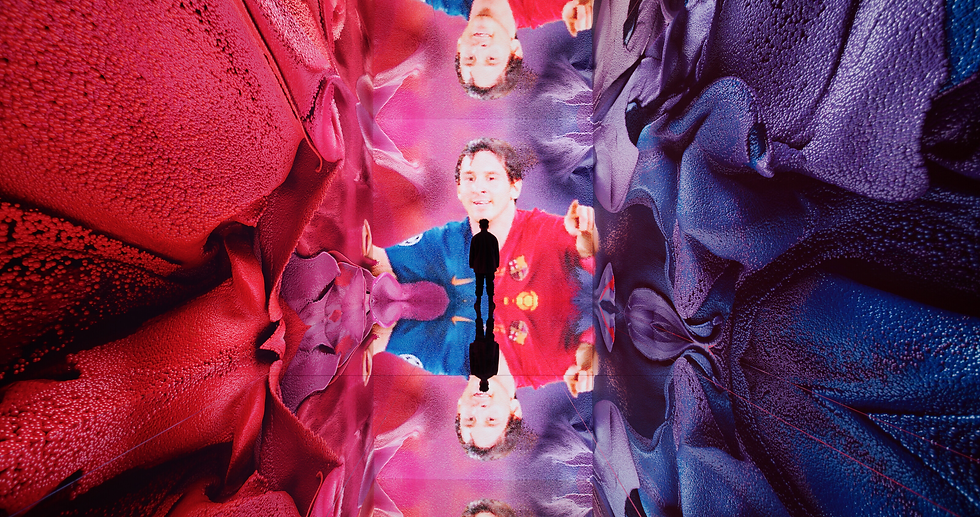
In fact the 2026 World Cup began ahead of time in terms of local communication, and bears an extra emotional charge: it is Lionel Messi’s last World Cup, and eight out of 10 Argentines were awaiting his participation eagerly and mentioned it as the Cup’s most outstanding aspect. The conversation transcends sports and becomes a collective sendoff, as shown in a study by the OSA agency. The 2022 World Cup saw the presence of over 190 brands and 230 active campaigns. Argentine fans don’t perceive themselves as spectators but as starring participants in the game: they believe their presence, their songs and their rituals impinge directly on the result. This self-image is culturally unique and recognised at world level. It was thus understood by Fernet Branca, the Italian amaro that adopted the Argentine identity and way of being for its communication. In its latest campaign, ‘We’re Unbearable’ (Zurda Agency), it talks about Argentina’s intensity, about the way it is perceived by the world at large. Who, it asks itself humorously, will stand the Argentines if they achieve two Cups in a row?
In another delirious example of our intensity, what began as a joke on social networks ended up turning the New Zealand soccer player Tim Payne into a celebrity. An Argen-
tine content creator, Valen Scarsini (aka @elscarso) called on his followers to back the
World Cup’s least-known player, and the phenomenon went viral. Within just three days,
Payne went from 4,000 followers to more than three million. The craze event even attracted brands like Duolingo, KFC and McDonald’s and ended with an amusing video of
Payne’s giving his thanks in Spanish. Catriel Guerreiro and Ulises Guerriero —better known as Ca7riel and Paco Amoroso —are likewise an example of an epic. Following their explosive transit through NPR’s TinyDesk, they ceased to be an Argentine secret to become a
worldwide obsession, reaching extremely high benchmarks, at Bizarrap level. They transformed the pressure of so much exposure into PAPOTA, a musically brilliant EP, loaded with humour and with a critical view of the current music industry. Their stamp? Contemporary creativity in sync with a masterly mise en scène which in their latest EP, Free Spirits, included a collaboration with Sting, the epitome of emotional wellbeing.
The everyday epic
Intensity and ethos also extend to daily reality. Few activities are as closely connected with the economy as advertising. And the Argentine economy is experiencing a deep reconfiguration since the change in government. “Argentina has become a global test case — the question is whether Argentines can endure the pain” ran a headline in The Economist. Although Argentina attained an annual 4.4% GDP growth last year, the Argentine worker’s average monthly income is $700 (€610), and 55% of Argentine households have incomes of under $1,000. It is an economy that marks out winners and losers. As the Moiguer business consultancy puts it, a minimum monthly wage buys only 12 pizza pies, yet the registration of high-end cars rose 91% over the last five years for the fortunate most wealthy 4% of the population. This economic model’s great exporting strength resides in its farming sector and its energy reserves — but also in its creative services.
Local roots, global reach
The combination of creative resiliency, craft, strategic thinking and adaptability is one of local advertising’s great differentials, even within a context of economic volatility, political changes and an accelerated transformation of the industry on the basis of artificial intelligence and the new business models. Two movements mark the local market. There is the growth of independent agencies and creative boutiques, with smaller structures, agile and culturally connected. At the same time there is a process of contraction and concentration among the holdings that now bring together and/or reduce the number of agencies. A mutation from the format of agency diversification to that of sole communication platform, always keeping in mind that strategy and creativity continue to play a central role in the business.
“There is something that the world has been buying from Argentina for years and which we took too long to properly appraise. It isn’t soy. It isn’t lithium. It is creative talent,” said Papón Ricciarelli, CEO of Don by Havas. “And the global market has been validating this with a clarity which we ourselves, on the inside, sometimes fail to perceive. When the Havas group acquired shares in Don, it said it straightforwardly: it wasn’t buying production efficiency or low production costs. It was buying a creative product.
That is what Argentina has to offer. A way of thinking. A form of finding workarounds for problems that is genuinely our own, that was forged by instability, by a shortage of resources and by a culture that mixes Europe with Latin America in a way that exists nowhere else on the planet. We are good at this.” Consulted about the context, Joaquín Cubría, CCO & partner of GUT, put it this way: “I see Argentina rebounding in many aspects and falling behind as never before in others. The eternal duality. It gives you as many motives for being hopeful as for feeling we’re never actually going to take off. The phrase, ‘You leave Argentina for three weeks and when you come back everything has changed — but if you leave Argentina for 15 years, when you come back nothing has changed’ is indisputably still current. What’s different? 2026-27 has an economic tailwind.
In farming, natural gas, oil, the planets have aligned as never before and it would be stupid to waste energy on political fighting. Our sector has been revolutionised by AI and features brands that are adjusting to a consumption that never quite takes off. That said, agencies’ knack for getting blood out of a stone continues in force. The creative search does not throw in the towel or give up. In the network, GUT Argentina is a heavyweight office. Because it achieved what none other did in 2023, and because it is the office that exports and provides resources the most. Economically we are doing well but the scale doesn’t allow competing with the US or Brazil. Manu Ginóbili in the Quilmes commercial That’s why we assert ourselves with a worldwide view, speed in execution and quality in creativity.” Official data show that 64.8% of Argentine agencies export services and that, on average, exports represent 25% of their billings. The main markets are the US, Mexico and Chile. Advertising investments reached $1.2bn last year, 8% less than the year before.
“In Argentina we possess the superpower of doing much with little,” said Victoria Cole, CEO of VML LatAm. “My view of the marketplace is very optimistic and is grounded in a unique combination that is found here. On the one hand, we have a creative muscle shaped by scarcity: we are accustomed to searching out solutions, to stretching out every resource, and to not depending on the budget for getting good ideas. That is our great differential. Add to this, now, artificial intelligence, which operates as an almost infinite toolbox.
For a market like Argentina’s, it not only allows greater efficiency: it permits ideas, which previously were held back by the lack of resources, to become real. Technology has democratised the tools, but not the quality of the ideas. With that, Argentina has always overflowed.” That optimistic regard is shared by Pablo Sánchez Liste, the new CEO of the Untold ecosystem, with headquarters in Argentina and a presence in seven countries. “We are experiencing an extraordinary moment for creativity. A world without frontiers which opens up infinite possibilities, for those organisations that are capable, for thinking and working without geographies. Argentina has an enormous opportunity within that setting. Its creative talent can fit in in a natural manner with teams of the entire region and of the world in order to develop ideas that can catch people’s attention. Brands need partners who listen, who understand their challenges in depth, who provide strategic thinking and who transform that understanding into stories capable of generating a conversation and a connection. That’s why we believe in an ecosystem: an organisation that brings together different disciplines, cultures and specialties to heighten the power of ideas. That where the new solutions are born and where creativity finds a much larger scale in order to generate an impact.”
The contenders
In order to export talent, it is necessary to render it visible. In that sense, the Cannes Lions International Festival of Creativity has served as a display window for Argentina’s creative power. Although its volume of entries cannot be compared to that of other powers — the US, for example, submitted 12 times more items than Argentina in 2025 — it is outstandingly efficient when it comes to garnering Lions with ideas that transcend traditional categories. Let us run through some of the 2026 entries:
This year Mercado Libre along with GUT presents ‘Custom Billboards’. Using AI, each
outdoor billboard, in real time, analyses the surroundings, the time of day and the possible needs of the person viewing it, in order to generate a unique and relevant message. The
billboard adapts dynamically, chooses a specific product in the catalogue, and generates
a personalised message with a QR code that allows the sale to be carried out on the spot.
draftLine, for its part, developed an action for Stella Artois in a territory where brands can-
not place ads: Google Maps’ ratings. Named ‘Stella LocAD Guides’, the campaign called on
local guides to record experiences at iconic Buenos Aires restaurants and share reviews
and real photographs; the brand appeared in an organic manner, being there at the moment of consumption.
Can an emblematic moment in soccer be turned into an artwork on the basis of emotional data? The Mercado McCann agency believes so. After succeeding in getting Lionel Messi to choose his favourite goal, AI algorithms were developed that analysed his emotions, gestures and biometrics during that play, generating millions of points of information. With those data, the artist Refik Anadol created ‘A Goal in Life’, a unique piece that translates that memory into digital art. The work was sold at auction through Christie’s and the funds were donated, with the support of UNICEF, to charitable causes.
Argentina’s F1 car racer for Alpine, Franco Colapinto, has turned into a cultural phenomenon capable of connecting national pride, the Z generation and aspirational
storytelling. One of the ideas in competition this year is ‘The Originals Fake Collection’ for
Renault along with Publicis Argentina. It all originated when Colapinto remarked that the
official F1 merchandising was so expensive that he recommended that fans buy bogus
versions. On the basis of that phrase, Renault launched a digital platform in which fans could, for free, download official Colapinto logos, photos, illustrations and stickers to create their own, homemade merchandising. It is often said that Print is the mother of all
categories; although small in volume, with less than 3% of all Cannes Lions entries, it continues to maintain creative prestige and is frequently considered one of the “purest” categories for judging the quality of an idea. This is where Don by Havas participates with ‘See the Color’, a beautiful black-and-white campaign for Campari.
The Campari red is so iconic that people can even see it when it isn’t present. If we delve into non-traditional ideas, it is worth pointing to the proposal of the R/GA agency, which is behind the brand identity and the digital communication platform of NotCo’s Giuseppe. The chef Giuseppe — a striking artificial intelligence platform — explores molecular interactions, analysing billions of formulas of vegetable origin and finding combinations capable of reproducing the taste, texture, aroma and functionality of products of animal origin like milk, meat or mayonnaise.
For its part YPF, Argentina’s biggest energy company, competes with a campaign created together with Genosha for the purpose of rendering a remarkable fact tangible: eight out
of every 10 objects in the daily life of Argentines are immersed in a network of materials, transport, energy and innovation. Thanks to a system of live cameras and a computerised vision model trained to recognise thousands of objects in milliseconds, the platform allows everyday objects to be scanned and a determination to be made, in real time, of how much of that object’s value chain is linked to YPF.
When it’s a powerful idea, it is possible to compete even with something as simple as a mixer. The TombrasNiña agency and Paso de Los Toros (Pepsico) have understood that modern dating apps have modified the way in which people get to meet and have made establishing a connection in real life more difficult, particularly in bars, where the fear already is not only that of rejection but that of misinterpreting signals. In response, they created Torito, a mixer that operates as a clear social indicator: if you have it in your drink, you are open to meeting someone. The idea was launched on 11/11, International Singles Day.

One last question: Have you had your annual prostate check-up yet? A great initiative from Grey to put annual screenings on the agenda — and the possibility of getting it done for free at LALCEC medical centre.
The road ahead
Economists and consultants project a future of wealth for the Argentine economy in the years ahead. Between $65bn and $80bn more each year, thanks to energy, mining, agriculture and the knowledge industry, by 2030-33. How will this impact the communication industry? Will our creativity be up to this transformation? Will it be able to
capitalise on it?
In the view of Leandro Zumárraga, CEO Dentsu Argentina & Chile, one of the major challenges ahead for the industry will be to strike a balance between automation and creative differentiation. “Within that scenario, Argentina continues to have enormous value for the global industry. Beyond economic cycles, the Argentine markets keep up highly differential strengths: creative talent that is recognised worldwide, adaptability, fast incorporation of new technologies and a very sophisticated cultural sensibility. That combination of resiliency, creativity and technological capability positions the country as a very attractive hub for regional and global services.”
Ricciarelli warns: “Argentina’s young talent is being attracted abroad before maturing here. And the uncomfortable answer is that this talent exists, but if we don’t generate the conditions for retaining it, it is lost by the local market and gained by the world’s. The challenge facing us as an industry over the next 12 months is just one in number: to learn to charge what we are worth. Not only to internationalise our product. But also to internationalise our value. The current communication model demands that audiences should no longer just listen to the brands’ monologue, but want to speak to them as equals. We understood that model before most others did. And we exported it before the market demanded it. Argentina has a creative industry that plays in the world’s top league. The job for the years ahead is for this to cease being a well-guarded secret and start being a well-built business.”


Comments